What Is SSD-1B? A Versatile Local AI Image Model for Creative Work
That is one of the reasons Distinct AI gives creators access to multiple local AI models instead of locking everything behind one system. If you use a tool like Midjourney, you are mostly relying on one model experience. With Distinct AI, you can choose the model that fits the job. Segmind Stable Diffusion 1B, often called SSD-1B, is one of those choices. More than anything, SSD-1B is a model built around balance. It combines broad stylistic versatility, strong image quality, efficient performance, and wide compatibility into a dependable everyday AI image generation model that adapts well to many different creative workflows.
What Is SSD-1B? A Versatile Local AI Image Model for Creative Work
AI image generation is powered by models. Each model has its own strengths and creative personality. Some are better for realism, some are better for illustration, and some are built to move quickly through ideas.
That is one of the reasons Distinct AI gives creators access to multiple local AI models instead of locking everything behind one system. If you use a tool like Midjourney, you are mostly relying on one model experience. With Distinct AI, you can choose the model that fits the job.
Segmind Stable Diffusion 1B, often called SSD-1B, is one of those choices. More than anything, SSD-1B is a model built around balance. It combines broad stylistic versatility, strong image quality, efficient performance, and wide compatibility into a dependable everyday AI image generation model that adapts well to many different creative workflows.
A Balanced Local AI Model for Everyday Creative Work
Stable Diffusion is one of the world's most popular open-source AI image model families. Because it is open source, developers can build on it and create specialized versions.
Stable Diffusion XL, or SDXL, is one of the larger, more advanced models developed from that open-source Stable Diffusion family. Segmind used SDXL as the foundation for SSD-1B, creating a smaller, more efficient model built around balance.
For creators, that balance is the main benefit. SSD-1B offers strong image quality, broad stylistic range, and efficient speed. It is useful when you want to explore different visual directions without switching models.
SSD-1B does have limitations, which we will cover later, but its core strength is being a balanced everyday model for local AI image generation.
The Visual Style of SSD-1B
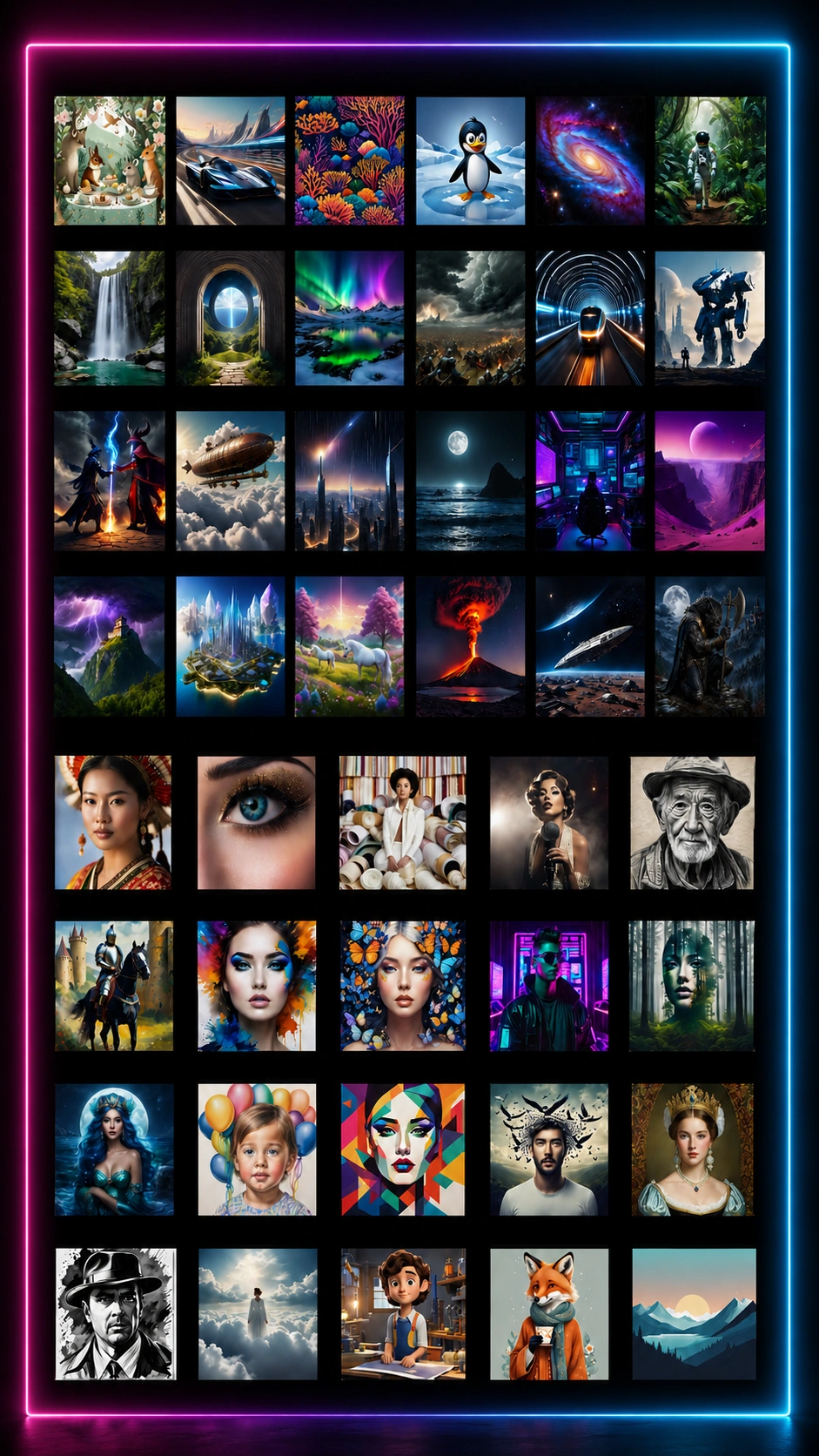
In the examples below, you can see SSD-1B working across several different visual directions. It can create photorealistic portraits, cinematic fantasy scenes, colorful illustrated characters, sketch-like black-and-white artwork, surreal landscapes, sci-fi environments, and softer cartoon-inspired images.
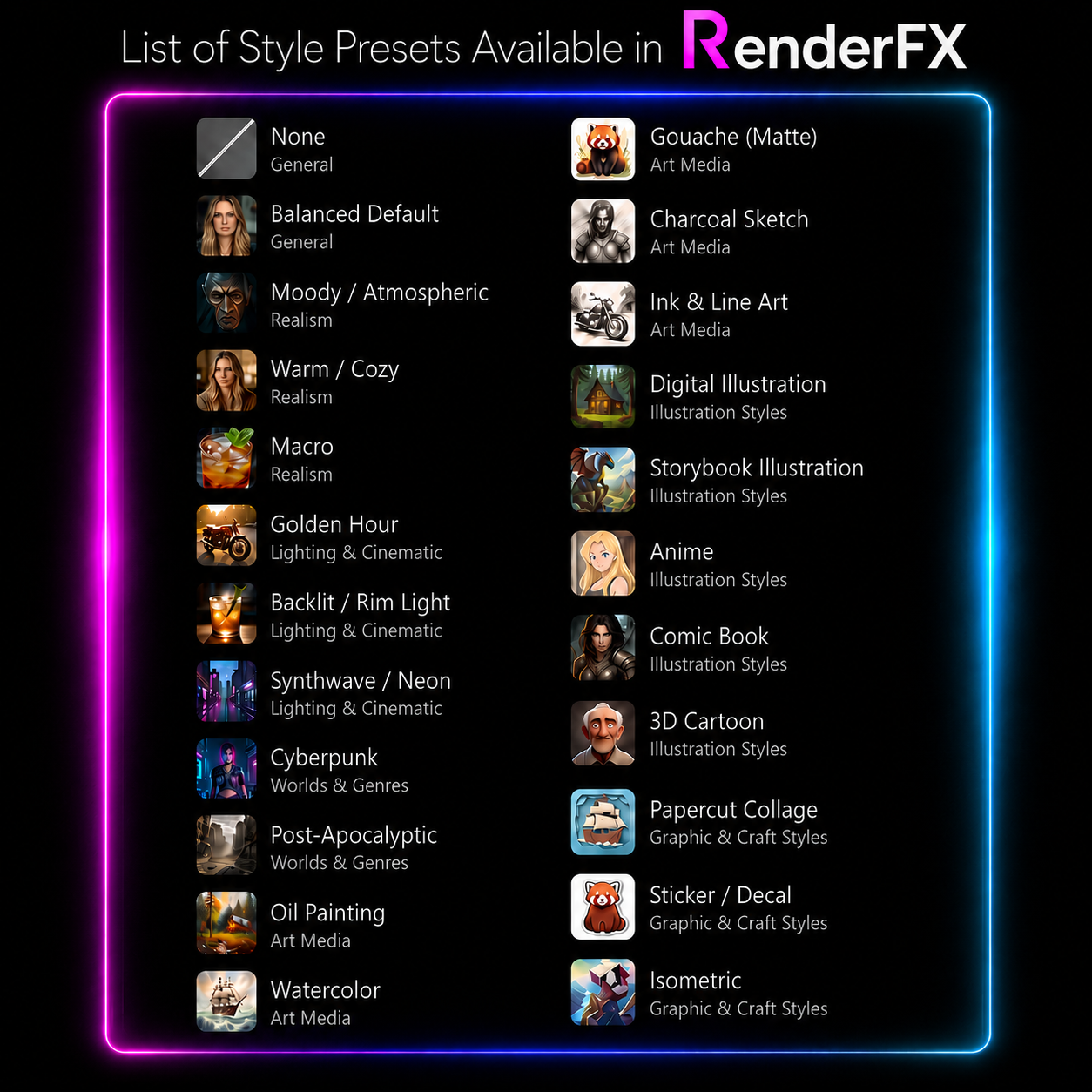
This range becomes even more powerful inside Render FX when SSD-1B is combined with our Render FX style presets. Because the model already has broad capabilities, presets can help steer that versatility into more specific creative directions. You can start with the same balanced model, then quickly push it toward cinematic photography, fantasy art, anime, ink sketching, and more.
Preset image types available in Render FX, Vision FX, and Vector FX
The results tend to feel polished, colorful, and visually clear. Portraits can have strong facial detail and lighting. Fantasy and sci-fi images often come through with dramatic atmosphere, glowing highlights, and cinematic composition. Illustration prompts can produce clean shapes, vivid colors, and a more stylized finish. Even sketch and ink-style prompts can hold together well enough to show that the model is not limited to one kind of output.
That does not mean SSD-1B is perfect at everything. The model card notes challenges with absolute photorealism, particularly in human depictions, as well as legible text and complex compositions. In our testing, detailed human hands can also be a weak point. These types of images may require additional generations, editing, or a more suitable model.
Best Use Cases for SSD-1B
After testing SSD-1B across a variety of prompts and visual styles, one thing becomes clear: this is an excellent all-purpose model. Rather than specializing in a single look, it performs consistently across a broad range of creative tasks, making it a great default choice when you're not sure which model to start with.
SSD-1B is particularly well suited for:
Exploring new ideas and quickly generating multiple concepts.
Creating concept art for games, films, or personal projects.
Producing stylized illustrations and digital artwork.
Designing marketing graphics, posters, and social media visuals.
Experimenting with different artistic styles before moving to a more specialized model.
Everyday image generation on mid-tier hardware, where balancing quality, speed, and compatibility is important.
If you're new to local AI, SSD-1B is one of the easiest models to recommend.
How to Prompt with SSD-1B
SSD-1B works well with clear, descriptive prompts that identify the subject first, then add visual details such as appearance, setting, style, lighting, and mood.
Segmind, the company behind SSD-1B, recommends straightforward natural-language prompting. For example:
Prompt example:
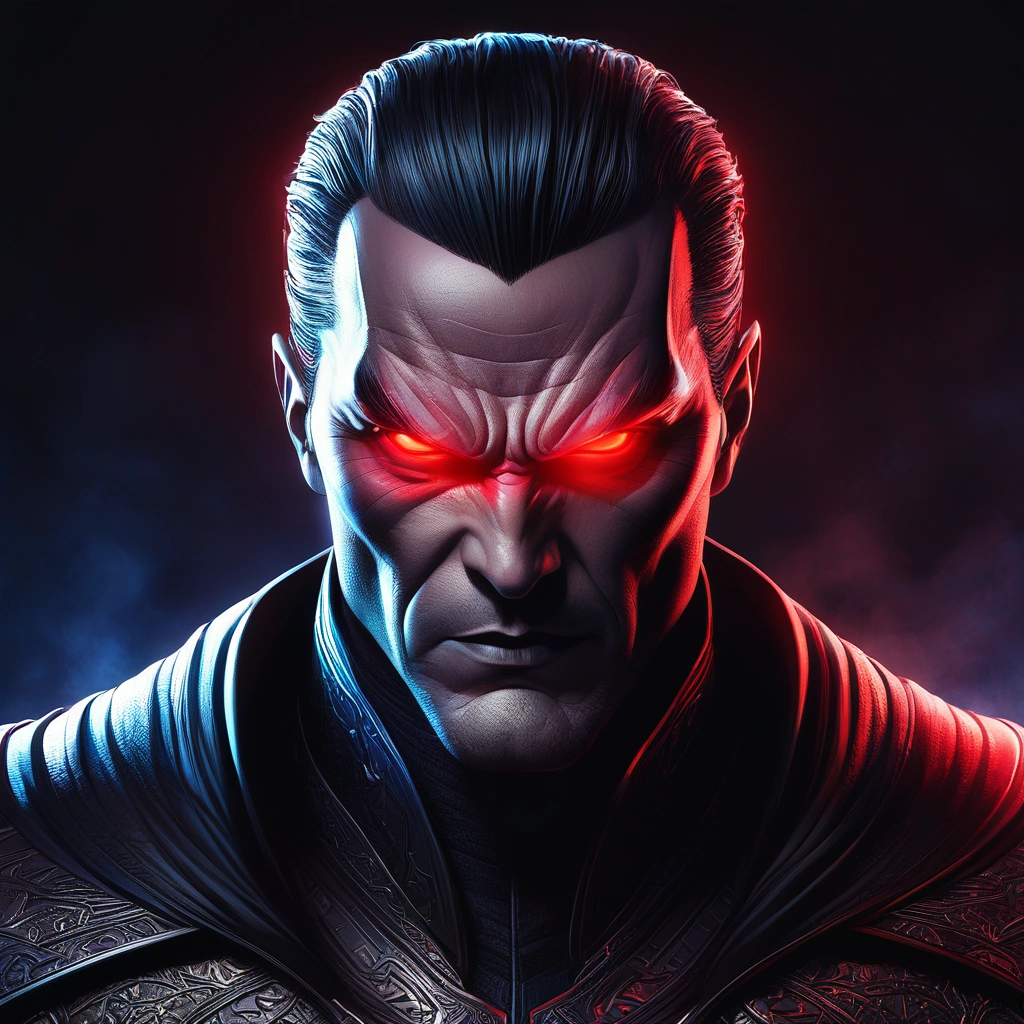
“A close-up portrait of a menacing comic book villain with slicked-back black hair, sharp angular features, glowing red eyes, dark futuristic armor, dramatic red and blue lighting, smoky background, intense cinematic mood.”
Render FX output with SSD-1B
A negative prompt tells the model what you do not want included in the image. Segmind recommends listing unwanted qualities as short phrases separated by commas.
Negative prompt:
“Blurry, low quality, poorly drawn face, bad anatomy, distorted features, extra limbs, text, watermark, logo.”
Start with the details that matter most, then refine the prompt and negative prompt based on the results.
Pros and Cons of SSD-1B
Pros:
SSD-1B works well across many visual styles, from portraits and illustrations to fantasy scenes, sci-fi environments, posters, and concept art. It is also efficient enough to run on mid-tier hardware, making it more accessible than larger, heavier models. For users who want to experiment quickly, generate variations, and move through ideas without friction, SSD-1B is a practical choice.
Cons:
SSD-1B is not always the best model for highly precise details. Human hands can be a weak point, especially when the image includes complex poses or close-up anatomy. Larger or more specialized models may also outperform it on extreme realism, intricate textures, or very specific visual requirements.
Improving SSD-1B Results
You can often improve SSD-1B results by using a negative prompt to identify details you want the model to avoid.
Negative Prompt Example
“Deformed hands, extra fingers, blurry details, distorted anatomy.”
Text Guidance (a feature avalible in most Distinct AI products) can also have a noticeable effect on the final image. If a result looks too saturated or overly intense, lowering Text Guidance can help create a more balanced image. In some cases, increasing it can help SSD-1B follow a detailed prompt more closely.
SSD-1B System Requirements
Using Distinct AI's applications SSD-1B can run using either a supported CPU or a compatible dedicated GPU. The requirements differ because CPU-based generation relies more heavily on system RAM, while GPU-based generation uses dedicated video memory. As a result, the CPU configuration requires more system memory even though it does not require a dedicated graphics card.
CPU-Based Generation
For CPU-based generation using the optimized INT8 model:
Processor: Intel 11th Gen Core processor or newer with INT8 support
System memory: 24 GB RAM
Free disk space: 2.1 GB
Graphics: Integrated graphics supported; no dedicated GPU required
Dedicated GPU Generation
A compatible dedicated GPU provides faster image generation and uses its own video memory, allowing the system RAM requirement to be lower than it is for CPU-based generation.
NVIDIA GPU
Graphics: NVIDIA GeForce RTX 30 Series or newer
Video memory: 6 GB VRAM or more
System memory: 16 GB RAM
Free disk space: 4.2 GB
Giving creators hardware options is part of the Distinct AI Advantage over other local options that are out there.
Final Thoughts
SSD-1B is one of the most well-rounded AI image generation models available in the Distinct AI lineup. It offers a strong balance of local AI performance, creative versatility, speed, and compatibility, making it a practical choice for creators exploring AI-generated images on their own desktop.
If you are getting started with local AI image generation, SSD-1B is one of the easiest models to recommend in the Distinct AI ecosystem.